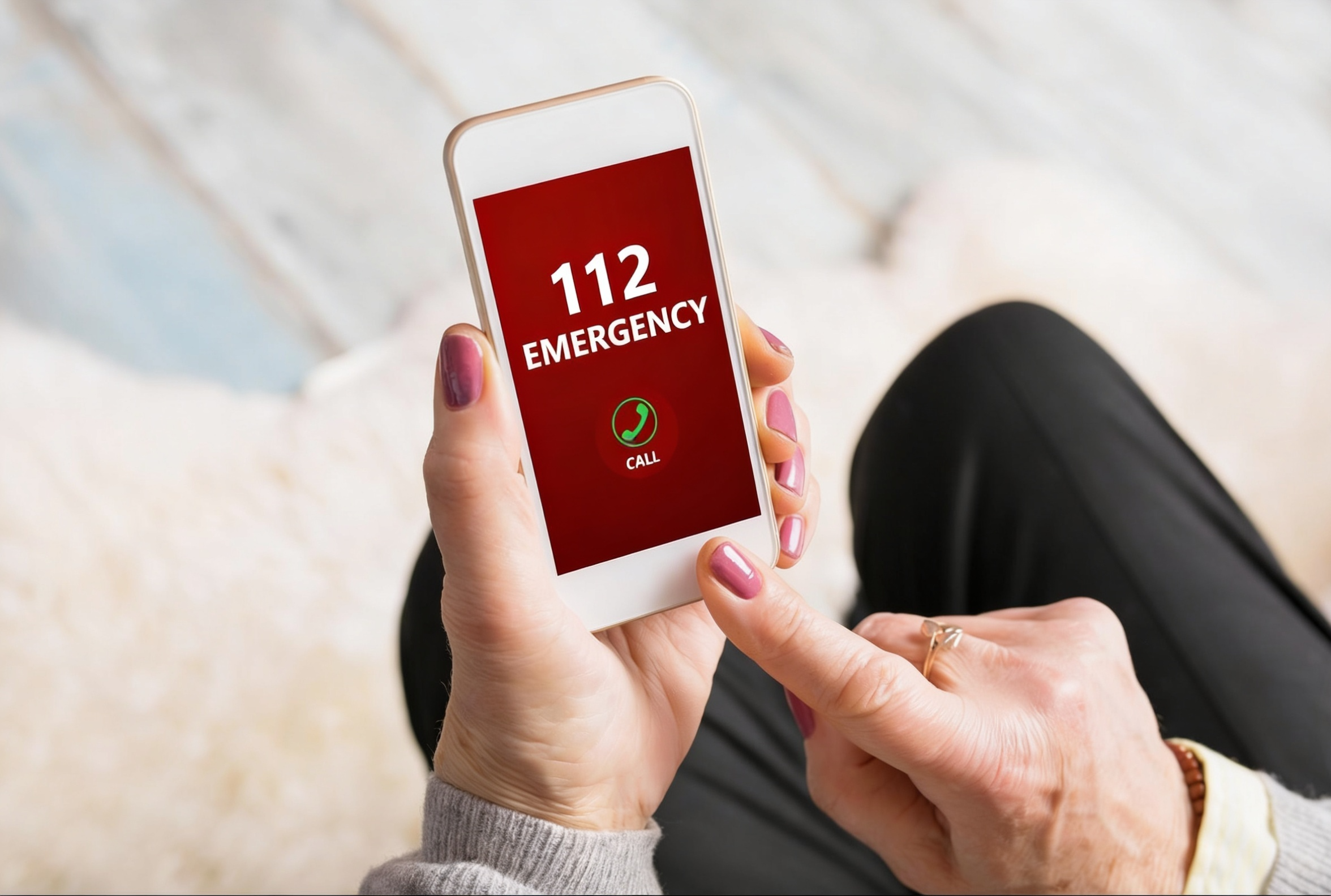
Emergency Number in Georgia: 112 Guide for Parents
Guide to Georgia's emergency number 112 for parents - when to call, what to say, and how to prepare your family for a medical emergency with a child.
By Dr. Tamar (Tuto) Baramidze · 7 min read
Quick Answer
Georgia's single emergency number is 112. One call connects you to ambulance, police, and fire/rescue, 24/7, free from any phone - even one without a SIM card or credit. 112 call-takers handle Georgian, English, Russian, Armenian, Azerbaijani, and Turkish. For non-emergency health questions, the Ministry of Health hotline is 1505.
Understanding Georgia's Emergency System
112 is the unified emergency number in Georgia. It is operated by the Public Safety Command Center 112, a legal entity of public law under the Ministry of Internal Affairs, and has been the single number for ambulance, patrol police, and fire/rescue since it replaced the older separate numbers in 2012 - including the previous standalone medical line, 113. For any medical emergency in Georgia today, dial 112.
When you call 112, a trained call-taker takes your information and dispatches the relevant service, or several services together if the situation requires it. Calls are recorded for quality assurance. The center operates 24 hours a day, every day, and uses mobile-network location data to help responders find you faster.
Calling 112 for a Medical Emergency
For any medical emergency with a child, dial 112. The call-taker will route your call to ambulance dispatch and stay on the line while a crew is sent. Ambulance teams in Georgia carry equipment for resuscitation and basic emergency care and transport critically ill children to the nearest hospital with appropriate capacity.
Tbilisi has multiple hospitals with pediatric emergency departments open around the clock, including dedicated children's emergency facilities. Ambulance dispatch is coordinated regionally; in the greater Tbilisi area the Emergency Service (ERS) is one of the primary providers, and the 112 dispatcher routes the closest available crew regardless of provider.
For health concerns that are not an emergency - questions about feeding, sleep, mild illness, vaccinations, or whether a symptom needs a doctor today - the Ministry of Health operates a 24/7 hotline on 1505. For pediatric questions specifically, a home-visit pediatrician like Dr. Tuto can assess your child at home and advise whether the situation warrants a hospital visit.
When to Call Emergency Services with Children
Call 112 immediately for any life-threatening situation involving a child. This includes difficulty breathing, loss of consciousness, severe injuries from accidents, suspected poisoning, or seizures lasting more than five minutes. High fever combined with altered mental state, signs of severe dehydration, or any situation where a child appears critically ill also warrants an immediate emergency call.
For newborns and infants, additional warning signs include persistent inconsolable crying combined with other concerning symptoms, extreme lethargy, refusal to feed, or any situation where you believe your baby is in immediate danger. With very young children, parental instinct matters: if something feels seriously wrong, call.
Preparing Your Family for Emergencies
Keep a short emergency list visible at home - on the fridge, near the door, or programmed into every phone in the household. Include 112, the 1505 health hotline, and the direct line of your child's pediatrician. Make sure caregivers, babysitters, and older children know that 112 is the number to dial for any emergency.
Keep important medical information for each child within easy reach: chronic conditions, current medications, known allergies, and recent vaccination dates. In an emergency, this information helps responders provide the right care quickly. Many international families find it useful to keep this list in both Georgian and English.
Having your home address written clearly in Georgian script speeds up dispatch. If you live in an apartment building, include the entrance number and floor. The 112 Georgia mobile app, available for Android and iOS, can send your GPS location to the dispatcher automatically and also supports silent SOS and text chat - useful when you cannot speak.
When to call 112: If your child shows any of the following signs, call 112 immediately: difficulty breathing, loss of consciousness, severe injury, suspected poisoning, seizures lasting more than 5 minutes, high fever with confusion or extreme lethargy, or any situation where you believe your child is in immediate danger.
Living as an international family in Georgia means learning the local emergency system while keeping the medical standards you expect for your children. When your baby's first week at home brings unexpected challenges, knowing exactly how to get help is part of feeling settled. Families looking for international newborn care in Georgia benefit from understanding both emergency protocols and routine pediatric options.
If you would like guidance on emergency preparedness specific to your family's situation, a pediatrician can help you build a simple plan tailored to your child's age and any existing health conditions.
When to Call 112
If your baby is in immediate danger, call 112 now. Do not wait.
Call 112 immediately if your baby shows any of these signs:
- Blue coloring around lips, face, or fingernails
- Difficulty breathing, gasping, or stopped breathing
- Unresponsive or cannot be woken
- Seizure-like movements, rigid posturing, or loss of consciousness
- Severe bleeding that does not stop with gentle pressure
- Suspected choking with blocked airway
- Suspected head injury with vomiting, unequal pupils, or loss of consciousness
- A spotty, purple or red rash anywhere on the body that does not fade when pressed with a glass - can be a sign of sepsis
- Severe allergic reaction - swelling of face, lips, or tongue, trouble breathing, or widespread hives
Frequently Asked Questions
What languages do 112 operators speak in Georgia?
According to the official 112 service, call-takers handle calls in Georgian, English, Russian, Armenian, Azerbaijani, and Turkish. The 112 Georgia mobile app interface is available in five languages: Georgian, English, Russian, Armenian, and Azerbaijani.
Can I call 112 from any phone in Georgia?
Yes. 112 is free from any landline or mobile phone in Georgia, including a phone with no active service or no SIM card, as long as the phone is in range of any mobile network. Emergency calls are prioritised across all networks.
Is 113 still an emergency number in Georgia?
No. 113 was the standalone medical emergency number used in Georgia before 2012, alongside 111 for fire/rescue and 122 for patrol police. All three were consolidated into the single number 112 when the unified emergency system launched. Use 112 for any medical emergency today.
Should I go directly to the hospital or call 112 first?
For a true emergency, call 112 first. The ambulance crew can begin treatment on the way and choose the hospital best equipped for your child's condition. For situations that are urgent but not life-threatening, calling your pediatrician or going to a pediatric emergency department directly may be appropriate.
What information should I give the 112 call-taker?
State your location first - full address with apartment number and entrance, or your GPS location if you are using the 112 Georgia app. Then describe what is happening, the child's age, and the main symptoms or visible injuries. Give your phone number in case the call drops. Stay on the line and follow the call-taker's instructions until they tell you to hang up.
Sources
Dr. Tamar (Tuto) Baramidze
Pediatrician & Neonatologist, Tbilisi
20+ years of experience in newborn and pediatric care. Trusted by families from 30+ countries.
Read full profile →